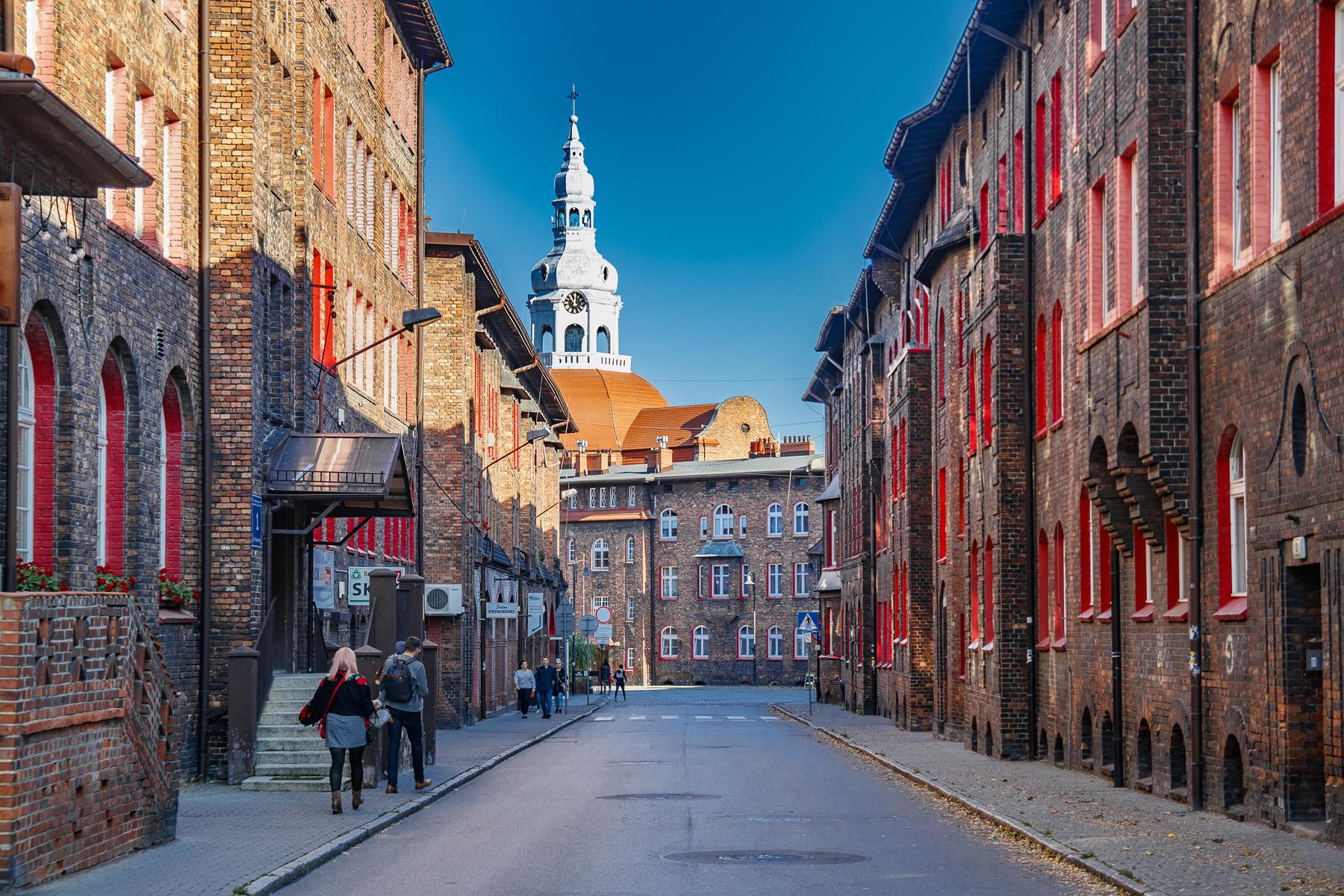
Osiedle Nikiszowiec w Katowicach, wraz pobliskim Giszowcem, to jedne z najciekawszych przykładów kolonii robotniczych w Europie z końca XIX i początku XX wieku. Zaprojektowali je na zlecenie spółki Georg von Giesche's Erben berlińscy architekci Emil i Georg Zillmann. Budowa Nikiszowca trwała od 1908 do 1919 roku, a powstało w niej dziewięć bloków z cegły, budynki użyteczności publicznej i kościół. Osiedle powstało w związku z kopalnią „Giesche”, która potrzebowała nowej załogi, i do dziś jest tłem wielu filmów o Górnym Śląsku. Osiedle jest ogólnodostępne, a zwiedzanie jest bezpłatne.
Section generated automatically by AI based on information from this page.
The beginnings of Nikiszowiec are closely related to the “Giesche” mine, which in the years 1903–1904, in the field “Reserve”, commenced the construction of two new shafts “Carmer” (currently “Pułaski”) and “Nickisch (currently “Poniatowski”) in order to mine new coal beds. To attract new staff, it was necessary to provide them with a proper place of residence. The colony was built in 1908–1915. It comprises 9 compact building quarters connected by means of characteristic batten plates and the parish church of St. Ann from 1927. The settlement is the background of many films on Upper Silesia. The site is entered on the list of Monuments of History.
Route chronicle
Nikiszowiec settlement in Katowice was established 102 years ago. It was designed by Emil and George Zillmann. According to the standards of those times, it offered an extremely high standard of life. Nevertheless, there were no bathrooms in flats, as due to the poor knowledge regarding ventilation in the building industry, constructors wanted to avoid moisture in rooms. However, there was a very modern wash-house with a mangle house and a bath. The full cleaning cycle in the mangle house lasted 3 hours. Special electric boilers were used for washing, while drying was performed in cupboards with the hot air blow. The entire cycle was completed with mangling, with the application of mangles equipped with electric drive.
Section generated automatically by AI based on information from this page.
Nie. Osiedle jest ogólnodostępne, a zwiedzanie jest bezpłatne. Adres to Rymarska 4 w Katowicach, kod pocztowy 40-425.
Budowę osiedla rozpoczęto w 1908 roku, a zakończono w 1919 roku. Kolonia została zaprojektowana przez Emila i Georga Zillmannów na zlecenie spółki Georg von Giesche's Erben.
W osiedlu zobaczysz dziewięć zwartych kwartałów ceglanych bloków, budynki użyteczności publicznej oraz kościół parafialny św. Anny z 1927 roku. Warto też poznać historię pralni z łaźnią, która była nowoczesnym rozwiązaniem tamtych czasów.
Według kroniki osiedla konstruktorzy chcieli uniknąć wilgoci w pomieszczeniach, ponieważ wiedza o wentylacji w budownictwie była wówczas ograniczona. Zamiast łazienek w mieszkaniach działała nowoczesna pralnia z łaźnią.
Osiedle wyrosło w związku z kopalnią „Giesche”, która w latach 1903–1904 budowała nowe szyby Carmer (obecnie Pułaski) i Nickisch (obecnie Poniatowski). Aby przyciągnąć nową załogę, trzeba było zapewnić jej odpowiednie miejsce zamieszkania.
Section generated automatically by AI based on information from this page.
ul. Mickiewicza 29
40-085 Katowice
tel. (32) 207 207 1
info@slaskie.travel
Portal powstał w ramach projektu
Mobilne Śląskie
Darmowa aplikacja SLASKIE.travel dostępna na platformach